Free template · For HR and people teams
Neuroinclusive job description template: what to include
A neuroinclusive job description lists the few tasks the role actually requires, separates must-haves from nice-to-haves, drops vague traits like "excellent communicator" and "fast-paced environment," explains each interview step in advance, and tells candidates how to ask for an adjustment. Spectrum Roadmap's template on this page gives you those seven sections, ready to copy.
- 01A plain job title
"Data ninja" - 02What you'll do
- 03What you need on day one
A list of twelve requirements - 04Nice to have, not required
- 05How we work
"Fast-paced environment" - 06How we hire, step by step
- 07How to ask for an adjustment
01
Why do standard job descriptions screen out neurodivergent candidates?
Most job descriptions screen for how a candidate presents rather than what a candidate can actually do. Phrases like "excellent communication skills," "team player," and "comfortable in a fast-paced environment" describe a personality, not a task. A neurodivergent candidate who could do the work well reads that list, decides the job isn't for them, and never applies. You never see that application, so the problem stays invisible.
Length does the same damage. A posting with a dozen requirements, half of them nice-to-haves dressed up as must-haves, tells a literal reader they're unqualified. Candidates who read the list as written take it at its word. If the role doesn't use a skill, listing it filters out people for no reason.
The fix is small. Spectrum Roadmap starts with the job description because it's the first screen in your hiring process and the cheapest one to change: no new tools and no budget, just a rewrite of one document per role.
You can redesign every interview and still miss the candidates who never applied. An unchanged job description quietly undoes the rest of your inclusive hiring work, because it decides who reaches the interview at all.
02
What goes in a neuroinclusive job description template?
A neuroinclusive job description template has seven sections: a plain job title, the actual work, a short list of must-haves, clearly labeled nice-to-haves, how the team works day to day, every step of the hiring process, and how to ask for an adjustment. Each section replaces a guess with a fact.
Candidates can then decide whether they can do the job, instead of whether they match an unstated picture of who usually does it. Spectrum Roadmap built this template for HR and people teams writing one posting or fifty, and for the hiring managers who review them.
A plain job title
Use the title people already search for, like "Data analyst" or "Customer support specialist." Skip internal levels and invented titles. A literal reader should know from the title alone what the job is.
What you'll do
List four to six core tasks, each starting with a verb and saying how often it happens. This is the heart of the description. Every other section should tie back to it.
What you need on day one
Three to five must-haves, each linked to a task in section 2. If nobody can say which task a requirement serves, cut it or move it to the nice-to-have list.
Nice to have, not required
Label these plainly and say they're optional. Add one line inviting people to apply even if they have none of them, so a literal reader doesn't count them as requirements.
How we work
Describe the real conditions: hours and flexibility, remote or office, noise, how much work happens in meetings versus in writing, and how priorities get set. Candidates need this to judge whether they can do their best work with you.
How we hire
Name every step: the format, how long it takes, who's in the room, and what you're assessing. Say whether you share questions in advance and whether there's a work sample instead of a live test.
How to ask for an adjustment
Tell candidates how to request a change to any step, who to contact, and that asking won't affect the decision. Whether they share why stays their choice. An accommodation is often as simple as questions in writing or a few extra minutes.
Copy the full template
Paste this into your applicant tracking system or a shared doc, then replace each item in curly braces. Keep the section order. It moves from what the job is, to what it takes, to how the candidate will be treated along the way.
Before you post, have the hiring manager confirm the day-one list. Those three to five items become the criteria every interviewer scores.
{Job title} ({remote, hybrid, or city}) · {pay range}

About the role
{Two sentences: what this person does, and why it matters to the team.}

What you'll do
- {Task, starting with a verb} ({how often})
- {Task} ({how often})
- {Task} ({how often})
- {Task} ({how often})

What you need on day one
- {Must-have} (you'll use it for: {task})
- {Must-have} (you'll use it for: {task})
- {Must-have} (you'll use it for: {task})

Nice to have, not required
- {Optional skill}
- {Optional skill}
If you meet the day-one list, please apply, even if you have none of these.

How we work
- Hours: {core hours, and how flexible they are}
- Where: {remote, hybrid, or office, and what the space is like}
- Communication: {how much happens in writing versus in meetings}
- Priorities: {who sets them, and how often they change}

How we hire
1. {Step}: {format}, {length}, with {who}. We look at {what}.
2. {Step}: {format}, {length}, with {who}. We look at {what}.
3. {Step}: {format}, {length}, with {who}. We look at {what}.
We send interview questions {how many days} before each interview.

Asking for an adjustment
You can ask for a change to any step, such as questions in writing, extra time, or a different format. Email {name} at {email address}. Asking won't affect our decision, and you don't need to tell us why.
The talent is there. It's being screened out.
A rewritten job description is the first of the small changes Spectrum Roadmap teaches, and the one that decides who applies at all.
03
Which job description phrases should you rewrite?
Seven phrases do most of the screening out in a typical job posting. Each one measures a social trait or a credential instead of the work. The rewrite names the actual task, so a candidate can judge whether they can do it and a hiring manager can assess it later.
This table lists each phrase, what it actually filters for, and an example rewrite. Spectrum Roadmap uses the same swap in its interview guidance: score the work, not the presentation.
| Phrase you'll see | What it actually screens for | Example rewrite |
|---|---|---|
| "Excellent communication skills" | Comfort with fast, spoken back-and-forth | Writes a weekly status update for the product team |
| "Team player" | Social ease with the current group | Reviews two teammates' code changes a week, with written comments |
| "Fast-paced environment" | Tolerance for constant interruption and change | Priorities are set every Monday and rarely change mid-week |
| "Must be able to multitask" | Rapid switching between unrelated tasks | Covers phone and email support in the same shift |
| "Strong attention to detail" | Nothing specific enough to assess | Checks invoices against purchase orders before payment |
| "Bachelor's degree required" | A credential, not the ability to do the work | Bachelor's degree or equivalent experience |
| "Culture fit" | Similarity to the people already there | Remove it, and describe how the team works instead |

04
What goes wrong when you change the job description but not the hiring managers?
A neuroinclusive job description only works if the people who interview hold candidates to it. When a recruiter rewrites the posting but the hiring manager still judges on eye contact and small talk, the candidates you attracted get screened out one step later. That's nobody's fault. Most managers were never shown another way to interview.
The most common pushback is that changing the process means lowering standards. Spectrum Roadmap answers it with the job description itself: the day-one must-haves become the criteria every interviewer scores. The standard stays the same. It's written down, so everyone measures the work rather than the small talk.
Before you post, walk the hiring manager through the rewritten description and agree on the must-haves together. Then turn them into your interview rubric, with the same core questions for every candidate. Spectrum Roadmap's Inclusive Interviewing guide covers that next step.
"The fix is rarely a big program. It's usually a handful of small changes, made by people who understand why they matter."Debra K. Solomon, founder of Spectrum Roadmap, with 30+ years in autism advocacy and corporate leadership
05
Should you build your own neuroinclusive hiring templates or use a ready-made toolkit?
Build your own if you're hiring for one or two roles and have time to get the details right. The template on this page, plus free accommodation guidance from JAN (the Job Accommodation Network) and the EEOC, is enough to start.
Use a ready-made toolkit when you need the same standard across many roles and many hiring managers, because keeping it consistent is harder than writing the first draft. The real cost of building is drift: each manager edits the template their own way, and the old phrases creep back in.
Do it yourself
Build from this template
Copy the seven sections, rewrite the phrases in the table, and use JAN and EEOC guidance for accommodations.
- Best for
- One or two open roles and an HR lead with time to own it
- Watch for
- Versions drifting apart between teams
Self-guided · For HR and people teams
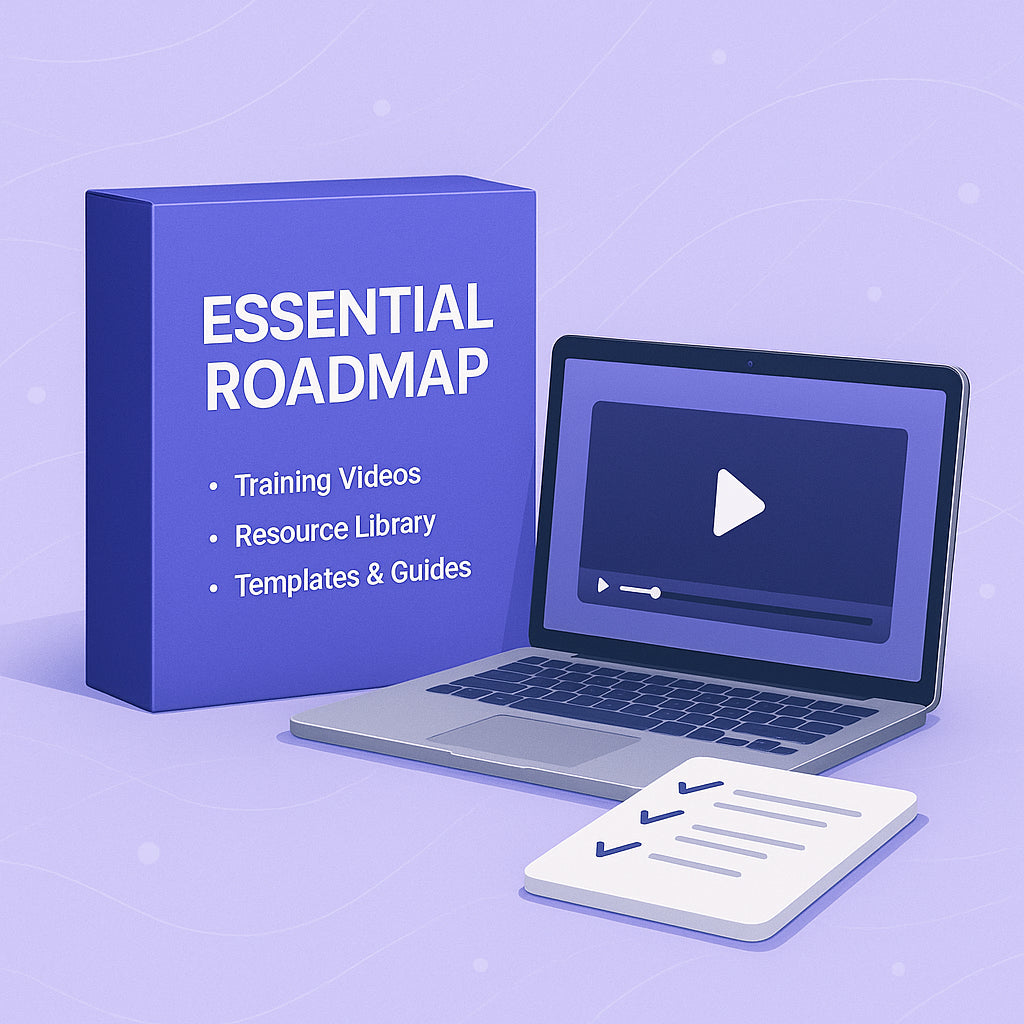
Essential Roadmap
Training videos, a resource library, and templates and guides, so your team can make these changes on its own schedule without a consulting engagement.
- Best for
- A small HR team that wants one repeatable system across roles and managers
1:1 coaching · Built with Debra
Premium Roadmap
Debra works with your team in your own Slack channel, on your actual job descriptions, interview loop, and onboarding.
- Best for
- Teams that want an expert to tell them exactly what to change, not just a course
When another option fits better
Spectrum Roadmap teaches your team to run an inclusive hiring process itself. If you need candidates delivered rather than a better process, a placement firm such as auticon or a sourcing platform such as SourceAbled is the better choice. If your team needs a formal certificate, IBCCES offers credit-hour certification. If you want a low-cost baseline of awareness for everyone, a self-paced course such as Candiversity's covers that.
06
Questions people ask about neuroinclusive job descriptions
Short answers from Spectrum Roadmap for HR teams, recruiters, and hiring managers rewriting their job postings.
What does a neurodiversity-ready job description look like?
It's short and literal: a plain title, four to six real tasks, three to five must-haves tied to those tasks, clearly optional nice-to-haves, and a description of how the team works. It also lists every interview step and tells candidates how to ask for an adjustment, without asking them to explain why.
Does a neuroinclusive job description lower our standards?
No. It removes requirements the job doesn't use and writes down the ones it does, so every interviewer measures the same work. The standard is usually clearer than before.
Should we mention neurodiversity in the job description?
A one-line welcome is fine, but specifics do more: a clear "how we hire" section and a plain way to ask for adjustments show candidates you mean it. Whether a candidate discloses anything stays the candidate's decision.
What should a neuroinclusive interview rubric include?
The three to five must-haves from the job description, a defined scoring scale for each, and the same core questions for every candidate. Score the content of each answer, not delivery traits like eye contact or small talk.
Where can recruiters get neuroinclusive job description templates and structured interview guides?
The seven-section template on this Spectrum Roadmap page is free to copy, and JAN and the EEOC publish free accommodation guidance. Spectrum Roadmap's Essential Roadmap adds training videos, a resource library, and templates and guides for HR teams, and its Inclusive Interviewing guide covers structured interviews.