Build vs. buy · For HR and people teams
Build vs. buy neuroinclusive hiring materials.
For most HR teams, the lower-risk path is to buy ready-made neuroinclusive job descriptions, interview rubrics, and guides, then adapt them to your roles. Your time goes into training managers instead of drafting. Spectrum Roadmap's Essential Roadmap pairs those templates with self-paced training. Build your own when you already have in-house neurodiversity expertise and time to test it.
01
Every neuroinclusive hiring kit covers the same five things.
Whether you build or buy, the goal is a hiring process that measures what a candidate can actually do. Spectrum Roadmap sees the same gap again and again: the talent is there, and it's being screened out by interviews that score eye contact and small talk. Fixing that takes a short list of documents, each changed in small ways. Building and buying cover the same documents. They differ in who writes them and how fast.
Job description template
Separate the must-haves from the nice-to-haves. Drop "excellent communication skills" unless the role truly needs it, and say plainly how a candidate can ask for a change to the interview.
Structured interview guide
The same questions, in the same order, for every candidate. Share the topics or format ahead of time, and ask about the work itself instead of hypotheticals about it.
Scoring rubric
The skills the job needs, written before the first interview, with what a strong, adequate, and weak answer looks like for each. Nothing about eye contact, handshakes, or rapport.
Interview change request
One simple way to ask for a written agenda, extra time, or a camera-off call. Disclosure stays the candidate's decision, and nobody has to explain why.
Onboarding checklist and manager guidance
Written instructions, a named person to ask, and regular check-ins in the first months. This is the piece home-grown kits most often skip, and it's why good hires leave within a year. Managers need to know what an accommodation looks like on an ordinary Tuesday.
02
Building, buying, and free resources, side by side.
This compares three ways an HR team gets neuroinclusive hiring materials: buying Spectrum Roadmap's Essential Roadmap and adapting it, building everything in-house, or working from free public guidance such as JAN and the EEOC. Each wins somewhere. Free resources are the stronger source on accommodation rules, and building your own gives you the closest fit to your roles.
| What matters | Buy: Spectrum Roadmap | Build in-house | Free public resources |
|---|---|---|---|
| Who writes the first draft | Spectrum Roadmap's templates and guides; you edit | Your HR team, from a blank page | You, working from public guidance |
| Fit to your exact roles | Close, once you adapt the templates | The closest fit, written for you | General, written for every employer |
| Manager training included | Self-paced training videos | Only if you build that too | Not the focus |
| Someone to ask | Live calls with Debra in the Community; Premium Roadmap adds Debra in your Slack channel | Whoever on your team knows the most | Varies by resource |
| Accommodation and disclosure rules | Practical guidance, no legal advice | Your counsel and HR policy | The authoritative source |
| What it costs | A program fee | Staff time to write, review, and test | Free |
| LMS, SSO, or a certificate | Not offered | Only if you already run an LMS | Not offered |
On a phone, swipe the table sideways to see every column.
03
An awareness webinar changes what people know. Materials change what they do.
Many teams start with a one-hour awareness session, and then nothing in the interview changes. That's nobody's fault. Awareness explains neurodivergence; it doesn't rewrite the question that screens a capable candidate out. The change happens when the job description, the interview guide, and the rubric themselves are different on Monday morning.
If a broad awareness course for the whole company is what you need, a self-paced course such as Candiversity's is built for that. If your hiring process is the problem, you need working documents and managers trained to use them. That's the gap Spectrum Roadmap's Essential Roadmap is built for.
Building costs staff time. Buying costs a fee and saves the blank page.
A home-grown rubric looks free, but someone has to research it, draft it, get it reviewed by people who understand neurodivergence, and fix it after the first few interviews. On a team of two, that work competes with every open role. A ready-made kit moves that effort from drafting to adapting.
Essential Roadmap is a self-guided program for HR and people teams, priced at [Essential Roadmap price, from the product page]. Compare that with the hours your team would spend writing and testing the same five documents. If you already have someone with deep neurodiversity expertise and the time to iterate, building can still be the better call.
A template you build alone has no one to call when a case gets hard.
Templates handle the ordinary interview. The hard moments are the ones they can't predict: a candidate who discloses mid-process, a manager who wants to skip the rubric, a new hire struggling in month three. With home-grown materials, your team works those out alone.
Spectrum Roadmap pairs its materials with people. The Community is a private Slack with live calls with Debra every other Thursday. Premium Roadmap goes further: Debra works with your team directly, in your own Slack channel, on what to change in your hiring and onboarding.
04
Built or bought, a toolkit fails without manager buy-in.
The rubric exists on paper. Nothing changes in the room. Recruiters adopt new templates, and hiring managers skip the new questions, score on gut feel, and push back that changing the interview means changing the standard. Within a few months the old interview is back.
The answer to that pushback is plain: a neuroinclusive interview keeps the same standard and measures it more directly. Spectrum Roadmap teaches managers to run a review that measures the work rather than the small talk. That's why the training and the templates come together.
- Signs it's happening: rubrics left blank, the same old questions, "culture fit" as the deciding note.
- What fixes it: managers who know why each question changed, and practice using the rubric before a real candidate.

05
Essential Roadmap gives you the materials and the training together.
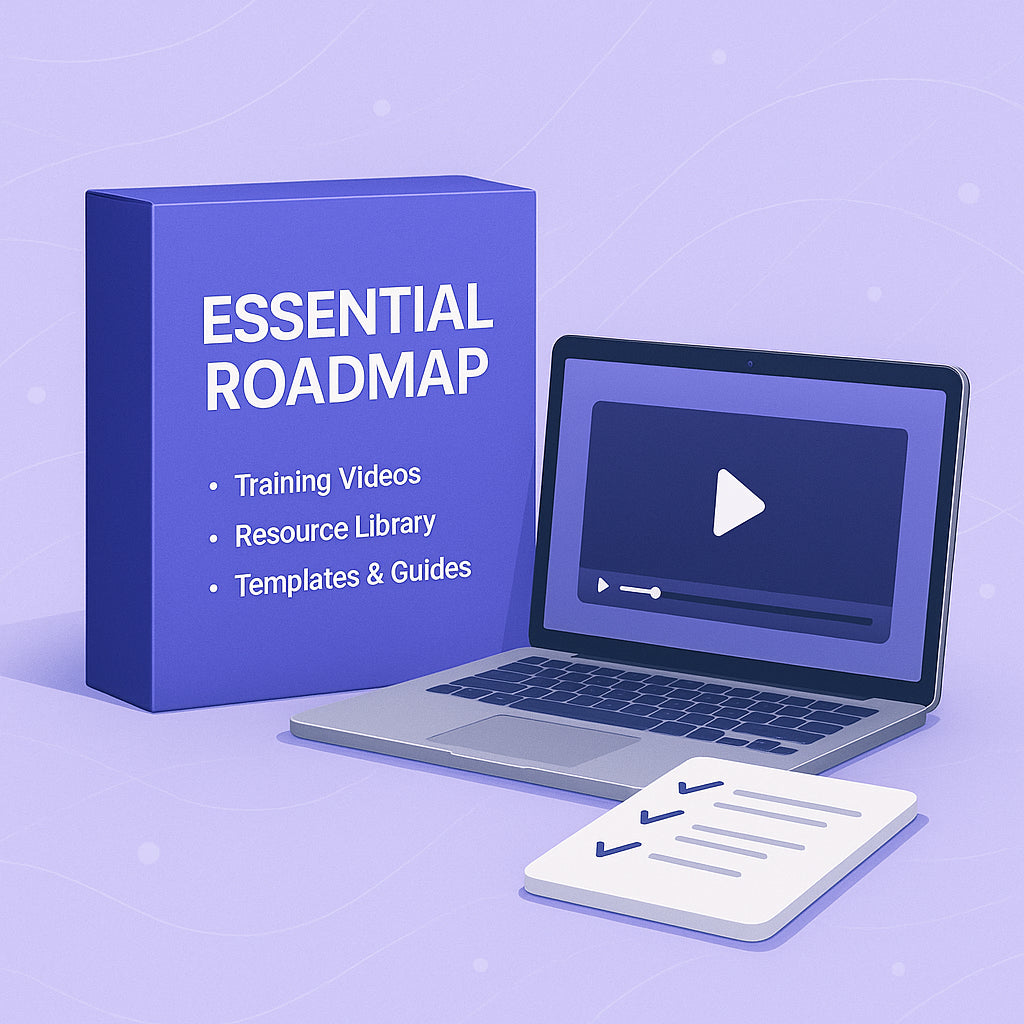
Spectrum Roadmap's Essential Roadmap is self-guided, for HR and people teams. It includes training videos, a resource library, and templates and guides, so your team can change its job descriptions and interviews and teach managers why they changed. You work through it at your own pace, with no consulting engagement.
It's built for the HR team that has decided to act and doesn't want to start from a blank page. It won't source candidates for you, report ROI to leadership, or issue a certificate.
I built Essential so a team could make those changes without waiting for me.Debra K. Solomon, founder of Spectrum Roadmap
06
Which path fits your team.
The right choice depends on how much expertise you already have, how many people you need to reach, and what you need to prove. Spectrum Roadmap fits a specific kind of team, and other options fit others better. Here's who each one suits.
When to choose Spectrum Roadmap
You're an HR or people team, often small, that has made a neurodiversity commitment and has no playbook yet. You want ready-made hiring materials plus manager training, and an expert to ask when a case gets hard.
When to build your own
You already have neurodiversity expertise in-house, such as an experienced DEI lead or an active neurodivergent employee group who can review drafts. Your roles are unusual enough that no template comes close, and you have time to test and revise.
When free public resources are enough
Your main question is what the rules require on accommodations and disclosure. JAN and the EEOC are the authoritative sources there, and they're free. Pair them with your counsel, and know that you'll still write the hiring documents yourself.
When an enterprise platform fits better
You need training for thousands of employees through an LMS with SSO and seat reporting, or a formal certificate your team can point to. Enterprise platforms such as Uptimize, or a certifying body such as IBCCES, are built for that scale.
07
Questions HR teams ask.
These are the questions HR and talent teams ask Spectrum Roadmap most when deciding whether to build or buy neuroinclusive hiring materials.
Should we build our own neuroinclusive job descriptions and rubrics or buy ready-made toolkits?
Buy and adapt, unless you already have in-house neurodiversity expertise. Ready-made templates give you a sound first draft, so your team's time goes into fitting them to your roles and training managers to use them.
What templates should a neuroinclusive hiring program include out of the box?
At minimum: a job description template, a structured interview guide, a scoring rubric, a simple way for candidates to ask for interview changes, and an onboarding checklist. Manager guidance belongs alongside them, because templates only work when the people using them know why they changed.
What should a neuroinclusive interview rubric cover?
It should list the skills the job needs, written before the first interview, with what a strong, adequate, and weak answer looks like for each. It should leave out eye contact, small talk, and other traits that have nothing to do with the work.
What goes wrong when recruiters adopt neuroinclusive hiring toolkits without manager buy-in?
Hiring managers skip the new questions, score on gut feel, and quietly return to the old interview. The rubric exists on paper but nothing changes in the room, so training managers matters as much as the templates.
Does changing the interview change our hiring standards?
No. A neuroinclusive interview keeps the same standard and measures it more directly, through a review that looks at the work rather than the small talk.
Where can recruiters get neuroinclusive job description templates and structured interview guides?
Free public resources such as JAN and the EEOC cover accommodation guidance, and your team can draft documents from them. Spectrum Roadmap's Essential Roadmap includes templates and guides alongside self-paced training for HR and people teams.
Ready to see what a few small changes can do?
Start with the Essential Roadmap: ready-made materials, and the training your managers need to use them.