Hiring toolkit · For HR and people teams
What a neuroinclusive hiring toolkit should include.
A neuroinclusive hiring toolkit should include five working tools: job description templates, structured interview guides, scoring rubrics, an accommodation request process, and an onboarding checklist. Spectrum Roadmap's Essential Roadmap pairs templates and guides with training, so your HR team and hiring managers know how to use them on a real hire.
01
Why didn't our awareness training change how we hire?
Awareness training changes what people know, and hiring only changes when the documents change: the job post, the interview questions, and the scorecard. A webinar on Tuesday leaves the same job description live on Wednesday. Spectrum Roadmap treats the toolkit as the bridge between the two.
Most interview loops test how someone talks about the work. A few changed questions let you see the work itself. That's why a toolkit matters more than a second round of awareness: it puts the change into the materials every recruiter and hiring manager already uses, so it holds after the training ends.
Programs that move from training to practice usually do three things. They rewrite one live job post and one interview loop first, rather than everything at once. They train the hiring managers who will use the new materials. And they agree on how a candidate can ask for an adjustment before anyone needs one.
02
What templates should a neuroinclusive hiring toolkit include out of the box?
A complete toolkit covers every step a candidate touches, from the job post to the first 90 days. Five tools do that work. Each one replaces a home-grown document that quietly screens out good candidates.
01 · JOB POST
Job description template
A neuroinclusive job description says what the job actually needs, in plain words, and nothing it doesn't. It should cover:
- Must-have skills, kept apart from nice-to-haves
- Literal language, with no idioms or "rock star" asks
- Real working conditions: noise, travel, how work is assigned
- What the interview will involve, and how to ask for an adjustment
02 · INTERVIEW
Structured interview guide
A structured interview guide asks every candidate the same questions in the same order, so you compare answers instead of impressions. It should cover:
- Questions about real past work, worded directly
- A written agenda sent before the interview
- The option to answer in writing or show a work sample
- Permission to pause, take notes, or ask for a question again
03 · SCORING
Interview rubric
An interview rubric ties each score to a skill the job uses and writes down what good looks like before anyone meets a candidate. It should cover:
- Four to six job skills, each mapped to a question
- A described strong, adequate, and weak answer
- A list of what is not scored
- Independent scoring before the panel talks
04 · ADJUSTMENTS
Accommodation request form
An accommodation request process is offered to every candidate the same way, so nobody has to explain themselves to get a fair interview. It should cover:
- What would help, with no request for a diagnosis
- Common examples: questions in advance, a quiet room, extra time
- Who sees the request, and who doesn't
- A clear note that disclosure stays the candidate's decision
05 · FIRST 90 DAYS
Onboarding checklist
An onboarding checklist turns "let us know if you need anything" into specific steps a manager actually takes. It should cover:
- A first-week schedule sent ahead of day one
- Instructions written down, plus one named go-to person
- Agreed communication preferences: chat, email, or a call
- Check-ins at 30, 60, and 90 days
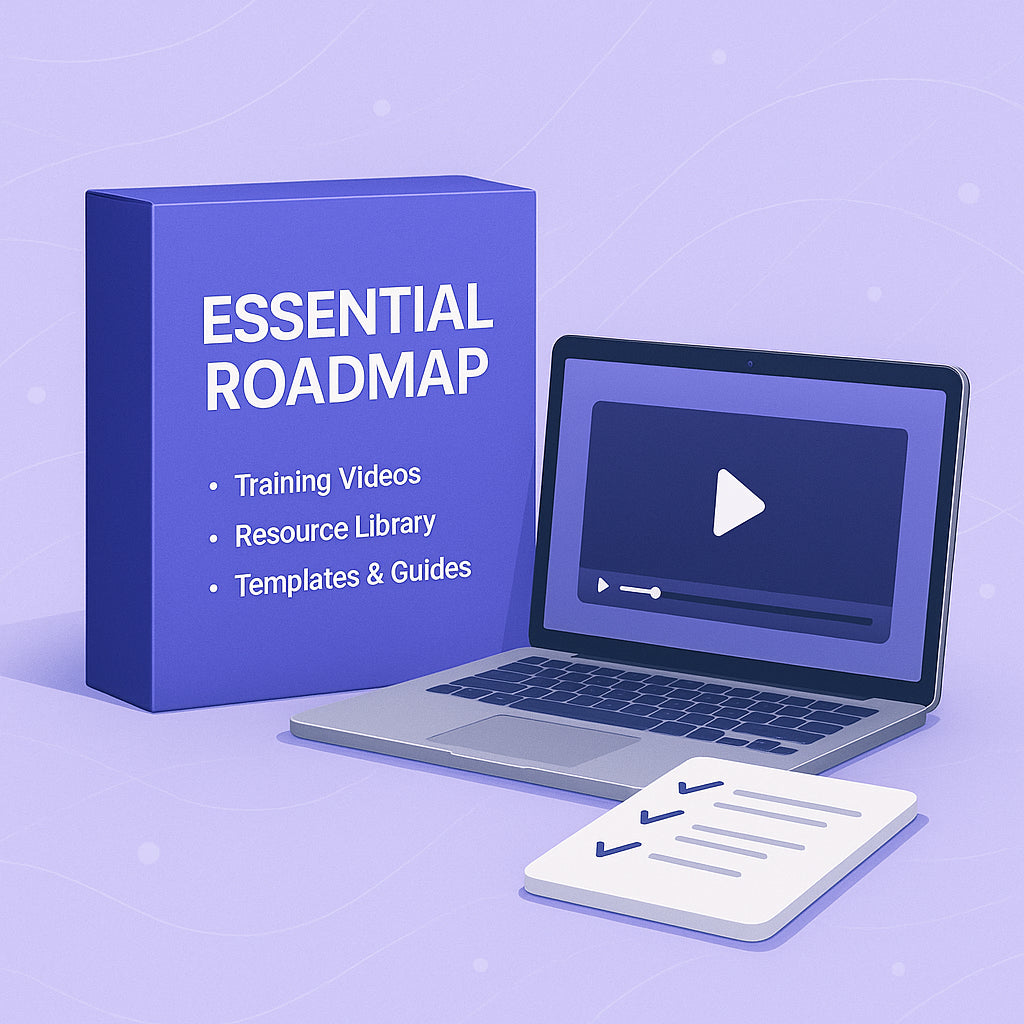
Spectrum Roadmap's Essential Roadmap includes templates and guides alongside self-paced training videos and a resource library, built for HR and people teams. The training explains why each change matters, so your managers can defend the new materials when a candidate's interview looks different from what they're used to.
03
How do you build a neuroinclusive interview rubric your team can use?
A fair rubric scores the work a candidate can do and says, in writing, what it won't score. Your recruiting team can draft one for a single role in an afternoon.
This is also the answer when a hiring manager worries the bar is dropping. A rubric holds every candidate to the same written standard for the job, and arguably a stricter one than gut feel. What goes away are points won or lost on small talk.
- Name four to six skills the job uses.Pull them from the must-haves in the job description, not from a past hire's profile.
- Write one question or work sample per skill.Ask about real past work, or give a short task the person would actually do in the role.
- Describe strong, adequate, and weak answers.Write them before the first interview, so scores reflect the answer and not the delivery.
- List what you will not score.Eye contact, small talk, pauses before answering, and how fast someone replies.
- Score alone, then compare.Each interviewer scores independently before the panel discusses, so one confident voice doesn't set the result.
- Question
- "Here's a short log from a failed deploy. Walk us through what you'd check first. Take notes or write your answer if that's easier."
- What we're looking for
- 5Names a likely cause and the next two checks, in order.
- 3Finds the cause with one prompt from the interviewer.
- 1Can't narrow down where to start.
- Not scored
- Eye contact. Pausing before answering. Whether they think out loud or in silence. Choosing to write instead of speak.
Why this matters
The talent is there. It's being screened out.
A candidate who can do the job may not interview the way your process expects. Very little of this calls for an overhaul. A question asked differently. Instructions written down. A scorecard that measures the work rather than the small talk.
04
What does a neurodiversity-ready job description look like?
A neurodiversity-ready job description is shorter, more literal, and more honest about the work than most home-grown ones. It lists what the job needs, describes the day as it really is, and tells candidates what the interview involves.
Start with the requirements. Long lists of "nice to have" skills read as must-haves to many neurodivergent candidates, who then don't apply. Keep the true requirements to a short list, label everything else as optional, and drop vague traits like "excellent communicator" unless you say what communication the job involves.
Then describe the conditions. An open-plan office, frequent travel, or priorities that change by the hour are facts a candidate needs to judge fit. Close with the interview format and one plain sentence on how to ask for an adjustment. That one sentence tells every reader the process was built with them in mind.

05
What goes wrong when recruiters adopt toolkits without manager buy-in?
The templates sit in a shared folder and hiring managers go back to their old questions. Recruiters can change the job post, but the interview and the first 90 days belong to managers.
Your managers want to get this right. Nobody showed them how. When they understand why a rubric leaves out eye contact, or why a written agenda helps, they use the materials on their own. That's why Spectrum Roadmap trains managers and HR on the same material, so both sides share a language.
"The fix is rarely a big program. It's usually a handful of small changes, made by people who understand why they matter."Debra K. Solomon, founder, Spectrum Roadmap
For teams that want help with the first rollout, the Premium Roadmap is built with Debra, in your Slack channel. The Spectrum Roadmap Community adds a private Slack space and live calls for questions that come up between trainings.
06
Should you build neuroinclusive hiring materials or buy a toolkit?
Build your own if someone in-house already knows neuroinclusive hiring and has time to maintain the materials; buy a toolkit if you need to start this quarter or your managers need training too. Six common routes line up below by what each gives you, when it fits best, and where it falls short.
Free public resources are the better choice for accommodation specifics and employer obligations, and a certification body is the better choice when you need a credential. Spectrum Roadmap fits small HR teams who want working materials and training without a consulting engagement or an enterprise contract.
| Route | What you get | Best fit when | Where it falls short |
|---|---|---|---|
| Build your own | Materials written around your roles, with no license cost | An in-house expert has time to write, test, and update them | Starts from a blank page; drifts when the author moves on; managers get no training |
| Free public resources (JAN, AskEARN, EEOC) | Accommodation ideas and guidance on employer obligations, free | You need ideas for a specific accommodation or the rules that apply | General guidance you still turn into your own job posts, guides, and rubrics |
| Self-paced awareness course (such as Candiversity) | A low-cost online course on neurodiversity at work | You need broad staff awareness on a small budget | Awareness alone rarely changes the job post, questions, or scorecard |
| Certification body (such as IBCCES) | Self-paced, credit-hour training ending in a formal certification | Your team needs a recognized credential | Built around credentialing more than rebuilding your hiring process |
| Spectrum Roadmap Essential Roadmap | Self-paced training videos, a resource library, and templates and guides | A small HR team wants to rework job posts, interviews, and onboarding on its own schedule | No certification, candidate sourcing, or enterprise LMS integration |
| Spectrum Roadmap Premium Roadmap | 1:1 coaching built with Debra, in your Slack channel | You want an expert to tell you exactly what to change | No candidate placement; a placement firm such as auticon fits that need |
Swipe the table sideways to see every column.
Questions
Questions HR teams ask about neuroinclusive hiring toolkits.
These are the questions that come up most when a team moves from good intentions to new hiring materials.
What should a neuroinclusive interview rubric include?
Four to six skills the job actually uses, one question or work sample per skill, and a written description of a strong, adequate, and weak answer for each. It should also list what is not scored, such as eye contact, small talk, and pauses before answering.
What does a neurodiversity-ready job description look like?
It separates must-have skills from nice-to-haves, uses plain and literal language, and describes the real working conditions. It also says what the interview will involve and how any candidate can ask for an adjustment.
Should we build our own neuroinclusive templates or buy a ready-made toolkit?
Build your own if someone on your team already knows neuroinclusive hiring and has time to write, test, and maintain the materials. Buy a toolkit if you need to start this quarter, or if your managers also need training to use the materials well.
Does changing the interview mean lowering our standards?
No. A structured interview with a rubric holds every candidate to the same written standard for the work itself. What changes is that candidates stop losing points for traits the job never needed, like small talk.
Where can recruiters get neuroinclusive job description templates and structured interview guides?
Free public resources such as JAN, AskEARN, and the EEOC cover accommodations and employer obligations, and you adapt them into your own documents. Spectrum Roadmap's Essential Roadmap includes templates and guides alongside training videos and a resource library for HR and people teams.
Is the Essential Roadmap a certification program?
No. Spectrum Roadmap teaches your team to change how it hires and supports people, and it does not award a certificate or credit hours. If your team needs a formal credential, a certification body such as IBCCES is the better fit.
Ready to see what a few small changes can do?
The Essential Roadmap gives your HR team the templates, guides, and training to rework one job post and one interview loop first, then the rest.