Expert coaching · For HR and people teams
What to expect from expert neurodiversity coaching
For HR teams and hiring managers deciding whether to bring in a coach. Here's what a good engagement delivers, how it compares with building in-house or hiring a consultancy, and what to ask before you sign.
Expect a coach who works on your real hiring process: your job descriptions, your interview questions, your managers' first weeks with a new hire. A good engagement ends with rewritten interviews, an accommodation routine managers can run, and answers between sessions when a case comes up. Spectrum Roadmap's Premium Roadmap is built with Debra Solomon, in your Slack channel.

- 30+ yearsof experience in autism advocacy and corporate leadership
- Your Slackwhere Premium Roadmap is built with Debra
- Two roadmapsself-guided Essential or coached Premium
01
What should a quality neurodiversity coaching engagement deliver?
A quality coaching engagement ends with your hiring process changed, in writing, and your managers able to run it without the coach. A course teaches the ideas. Coaching applies them to your open roles, your managers, and the cases already on your desk.
At Spectrum Roadmap, that's the difference between the self-guided Essential Roadmap and the Premium Roadmap built with Debra. Whichever coach you choose, these six things are fair to expect.
-
01
A look at your real process
Before giving advice, a good coach reads your job descriptions, interview loop, and onboarding, and shows you where capable candidates are being screened out.
-
02
Rewritten interviews
Structured questions and a scoring rubric that show what a candidate can actually do, plus interview modifications you can offer on request.
-
03
Managers who know what to do
Practical prep for the people who manage day to day: instructions written down, clear feedback, and what to say when someone discloses.
-
04
An accommodation routine
A simple, repeatable way to handle requests, so nobody is guessing or over-promising. Often an accommodation is just a written agenda before the meeting.
-
05
Support past the start date
Onboarding and check-ins planned for the first months, so good hires stay instead of leaving within a year.
-
06
Answers between sessions
A way to reach your coach when a real case comes up on an ordinary Tuesday, instead of waiting for the next scheduled call.
Coaching that stops at awareness leaves the interview unchanged. Capable candidates keep getting filtered out on eye contact and small talk, and the ones you do hire meet managers who were never shown what to do.
02
Is a self-serve course enough if you have no internal neurodiversity expertise?
A self-serve course is enough when someone on your team has time to own the changes and your roles are fairly standard. Coaching earns its cost when nobody internally knows the first step, when hiring managers push back, or when a real disclosure is already on your desk. That's nobody's fault. It's just where things stand.
Start with a course when
- One person can own the rollout
- You're hiring for a few familiar roles
- Your managers are open to small changes
Add coaching when
- Nobody here knows where to begin
- Hiring managers worry about standards
- You've already lost a hire in the first year
The risk of a video-only course is the gap after it ends. Your team finishes the modules, then meets a candidate who asks for questions in writing, or a manager who doesn't know how to give feedback to a new report. A course can't answer that Tuesday's question. A coach can.
Spectrum Roadmap offers both paths. Essential Roadmap is self-guided, for HR and people teams who want to make the changes on their own schedule. Premium Roadmap adds Debra, working with your team in your Slack channel.
03
Build it in-house, hire a consultancy, or use a coached program: how do companies decide?
Companies decide by asking who will do the work and what should stay behind when the outside help leaves. This comparison lines up the four common paths on fit, workload, expertise for hard cases, and what you keep, including where Spectrum Roadmap's coached program is the wrong choice.
| What matters | Build it in-house | Hire a consultancy | Use a placement partner | Coached program |
|---|---|---|---|---|
| Best fit when | Someone on staff already knows neurodiversity hiring and has time to own it. | You want an outside team to run the program and have budget for a services engagement. | You need neurodivergent people placed in roles now, especially in IT. | You have no internal expertise but want your own HR team and managers to do the work. |
| Who does the work | Your team, alone. | The consultancy, with your team's input. | The partner sources and places; your managers take it from there. | Your team, with a coach checking the work. |
| Help on a hard case | Whatever you have in-house. | Available during the engagement. | Job coaching for the people the partner places. | Your coach, between sessions. |
| What stays when it ends | Whatever got written down. | Depends on the handover. | The placed hires and the partner relationship. | Your team's skills, rewritten interviews, and routines. |
| Watch for | Stalls when that person gets busy or leaves. | Often scoped for organizations larger than a team of two. | Oriented to large employers and technical roles. | Asks real time from your managers; no candidate pipeline or certificate. |
| Examples | A DEI lead or employee resource group | Neurodiversity in the Workplace | auticon | Spectrum Roadmap Premium Roadmap |
If you're rolling training out to thousands of employees and need an LMS, SSO, and seat management, an enterprise platform such as Uptimize is built for that scale. Spectrum Roadmap is built for smaller HR teams that need to get started without an enterprise contract.
Very little of this calls for an overhaul. Most of what works is polish.
A question asked differently. Instructions written down. An agenda sent before the meeting. Good coaching finds the small changes that matter in your process and helps your team make them.
04
What should the first 90 days of coaching look like?
The first 90 days should move from looking at your process, to changing the interview, to preparing managers for a new hire's first months. Each phase should leave something in writing that your team keeps.
Here's a reasonable shape for a team coaching engineering managers through their first neurodivergent hires. Engineers tend to respond to the concrete version: the exact question rewritten, the exact instruction written down.
-
Days 1 to 30
Look at what you have.
Your coach reviews the job description, interview loop, and onboarding for one or two open roles.
- Spots where the loop tests small talk instead of skill
- Agrees on what the role actually requires
- Leaves you with a short list of changes
-
Days 31 to 60
Change the interview.
Questions get rewritten so interviewers see the work itself, not how someone talks about it.
- Structured questions and a scoring rubric
- Written instructions for take-home or pairing exercises
- A briefing for hiring managers who'll run the loop
-
Days 61 to 90
Set up the first months.
Managers prepare for the new hire's start, so the hire you worked for stays.
- Written agendas and clear task handoffs
- A feedback routine the manager can keep up
- How to respond if a new hire discloses
Teams that change the interview but not the first months often hire well and then lose the person within a year. Phase three is the one most worth protecting when time runs short.
05
What should a small company ask a neurodiversity coach before signing?
Ask who's actually coaching you, what they'll change in your process, and what they won't do. A small team without HR specialists can judge any coach, Spectrum Roadmap included, on these six questions.
Who will we actually work with?
 Look for a named coach with hiring and neurodiversity experience. At Spectrum Roadmap, that's founder Debra Solomon, an NYU-certified life and career coach with 30+ years in autism advocacy and corporate leadership.
Will you work on our real roles?
A good coach asks for your job descriptions and interview questions in the first weeks. Generic examples alone are a sign you're buying a course.
How do we reach you between sessions?
Hard cases rarely wait for a scheduled call. Premium Roadmap is built with Debra in your team's Slack channel.
What will we have when it ends?
Expect rewritten interview questions, a rubric, and routines your managers can run. If the answer is only "insight," keep asking.
How do you handle disclosure?
A careful coach treats disclosure as the employee's or candidate's decision and sends legal questions to your employment counsel.
What don't you do?
A coach who answers this plainly is easier to trust. Every provider has limits, and you should know them before you sign.
Where Spectrum Roadmap isn't the right fit.
Spectrum Roadmap trains and coaches your team; it doesn't source or place candidates, issue certificates or CPD credit, run an enterprise LMS, or produce ROI dashboards. If you need placement, look at a partner such as auticon or SourceAbled. If you need a formal credential, look at a certification body such as IBCCES.
Questions people ask.
Short answers about neurodiversity coaching, from Spectrum Roadmap.
Is a self-serve neurodiversity course enough if we have no internal expertise?
It can be, if someone on your team owns the changes and your hiring situations are fairly standard. When nobody internally knows where to start, or a real disclosure or manager conflict is already on your desk, you'll want a coach you can ask. Spectrum Roadmap offers both: the self-guided Essential Roadmap and the coached Premium Roadmap.
What's the difference between neurodiversity coaching and a neurodiversity consultancy?
A consultancy typically runs the work for you as a services engagement. Coaching teaches your own HR team and managers to make the changes, so the skills stay when the engagement ends. Larger organizations that want an outside team to own the program often prefer a consultancy.
Will changing our interviews lower our hiring standards?
No. A well-redesigned interview keeps the same job requirements and removes the parts that test social presentation, like eye contact or small talk. The result is a review that measures the work rather than the small talk.
Can a neurodiversity coach give us legal advice on disclosure and accommodations?
No, and a good coach will say so. Coaching covers how managers respond to a disclosure and what an accommodation looks like day to day, and disclosure stays the employee's or candidate's decision. For legal questions, talk to your employment counsel; the Job Accommodation Network (JAN) is a free resource for accommodation ideas.
Does Spectrum Roadmap place neurodivergent candidates or certify our team?
No. Spectrum Roadmap trains and coaches your team to find, hire, and support neurodivergent talent; it doesn't run a candidate pipeline or issue certificates. If you need placement, a staffing partner such as auticon fits better, and if you need a formal credential, look at a certification body such as IBCCES.
How do I make the case for outside coaching when we've always built our own training?
Point to what the DIY approach hasn't fixed: capable candidates screened out at interview, or new hires who leave within a year. A good coaching engagement is aimed at those moments and leaves your team with rewritten interview questions and routines it keeps using.
Keep going with Spectrum Roadmap.
Guides and programs for the next step, whichever path you choose.
- Premium Roadmap See what coaching with Debra in your Slack channel includes.
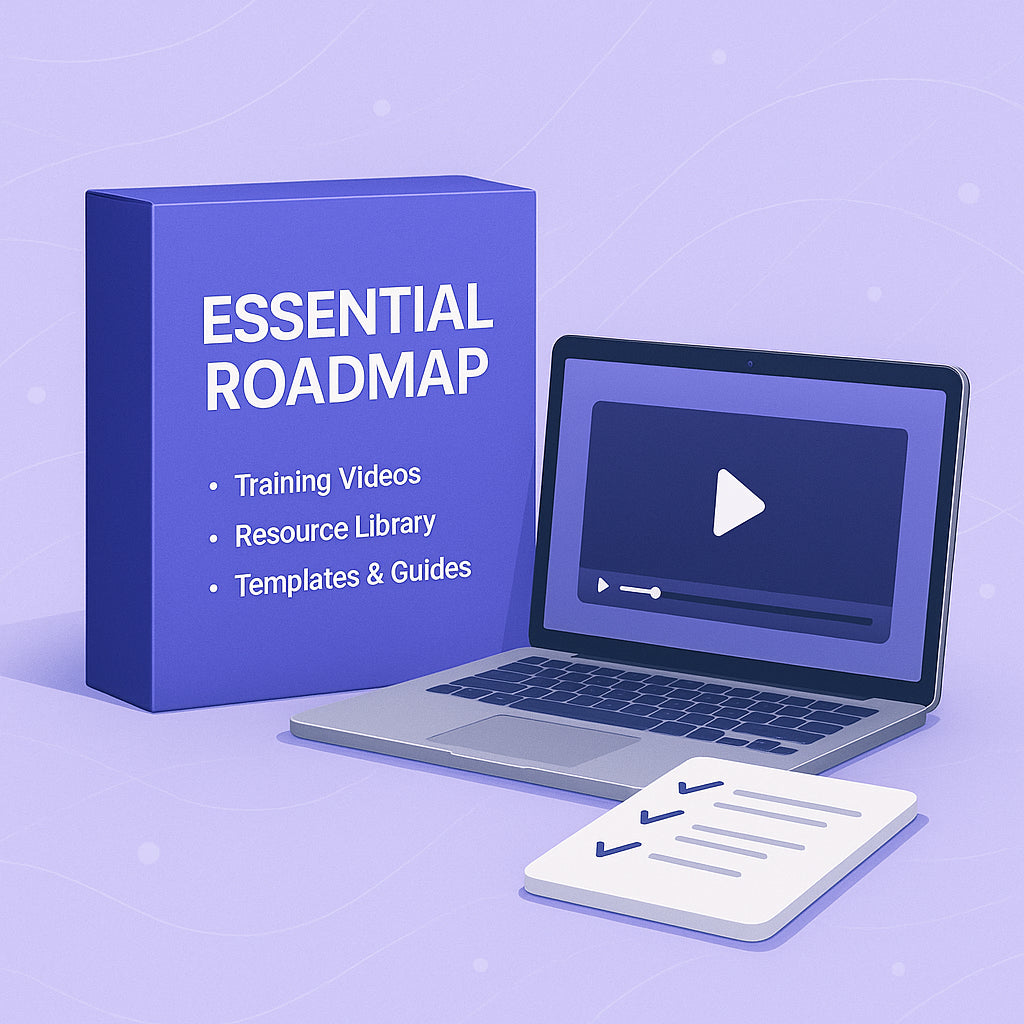 Essential Roadmap The self-guided option, for teams with someone ready to own the changes.
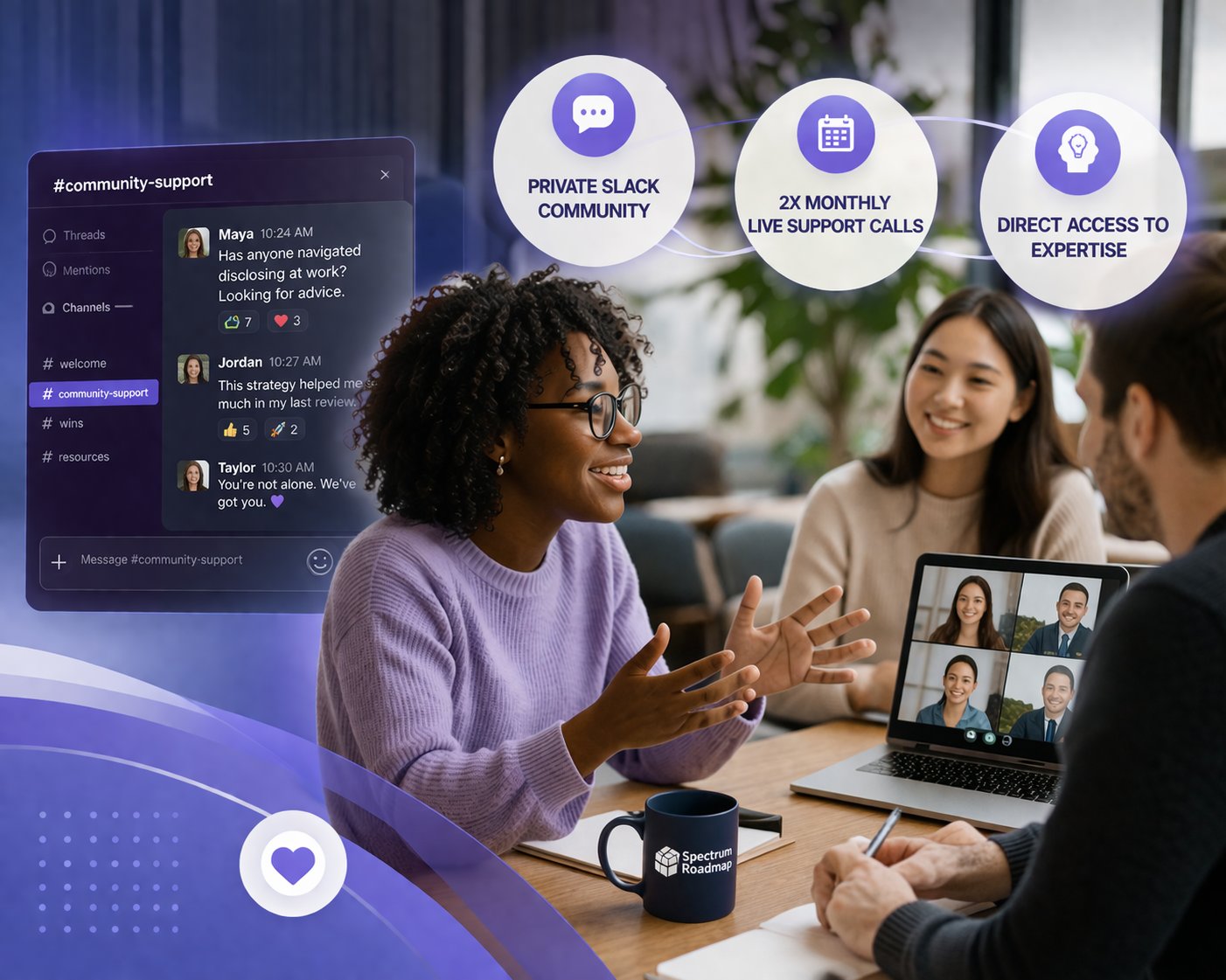 The Community Peer support in Slack and access to live calls between trainings.
- Inclusive interviewing guide Start rewriting your interview loop before you talk to any coach.
- Manager disclosure guide What a manager should say, and not say, when someone discloses.
- Training ROI How to frame the investment when leadership asks what it's worth.
Ready to see what a few small changes can do?
Premium Roadmap puts Debra in your Slack channel, working on your real roles with your HR team and managers.