Build vs. buy · For HR and people teams
Common complaints about consultancy-led neurodiversity programs, and what to do instead.
For HR teams at smaller companies weighing a neurodiversity consultancy, or moving off one, with no neurodiversity expertise in-house.
Smaller employers' usual complaints about consultancy-led neurodiversity programs: they're sized for a bigger company, they stop at awareness training while interviews stay the same, and the know-how leaves when the engagement ends. Spectrum Roadmap's alternative is a coached self-serve program, where your HR team learns a repeatable system and makes the changes itself, with Debra Solomon coaching.

At a glance
Four complaints, and the fix for each.
These four come up most when smaller HR teams describe a consultancy-led neurodiversity program that didn't stick. Each one has a practical fix your own team can run, and Spectrum Roadmap is built around those fixes.
- 01It's scoped for an enterprise rollout.
Fix: start with what a team of one or two can run now.
- 02Awareness went up. Interviews stayed the same.
Fix: change the interview itself, question by question.
- 03Managers got one workshop, then a new hire.
Fix: give managers somewhere to take the Tuesday question.
- 04The know-how left when the engagement ended.
Fix: build the system inside your team, written down.
Complaint 01
It's scoped for an enterprise rollout, and you're a team of two.
Many neurodiversity consultancies are built for organization-wide engagements: discovery, audits, workshops, and a rollout their team leads. That shape fits a company with a dedicated DEI function and a budget line for it. For an HR team of one or two, it means a long buying process and a contract sized for a program you aren't ready to run yet.
Smaller teams describe the same moment: the big vendors want an enterprise contract and a huge rollout, and you just need to get started.
What to do instead
Start with what your team can run this quarter.
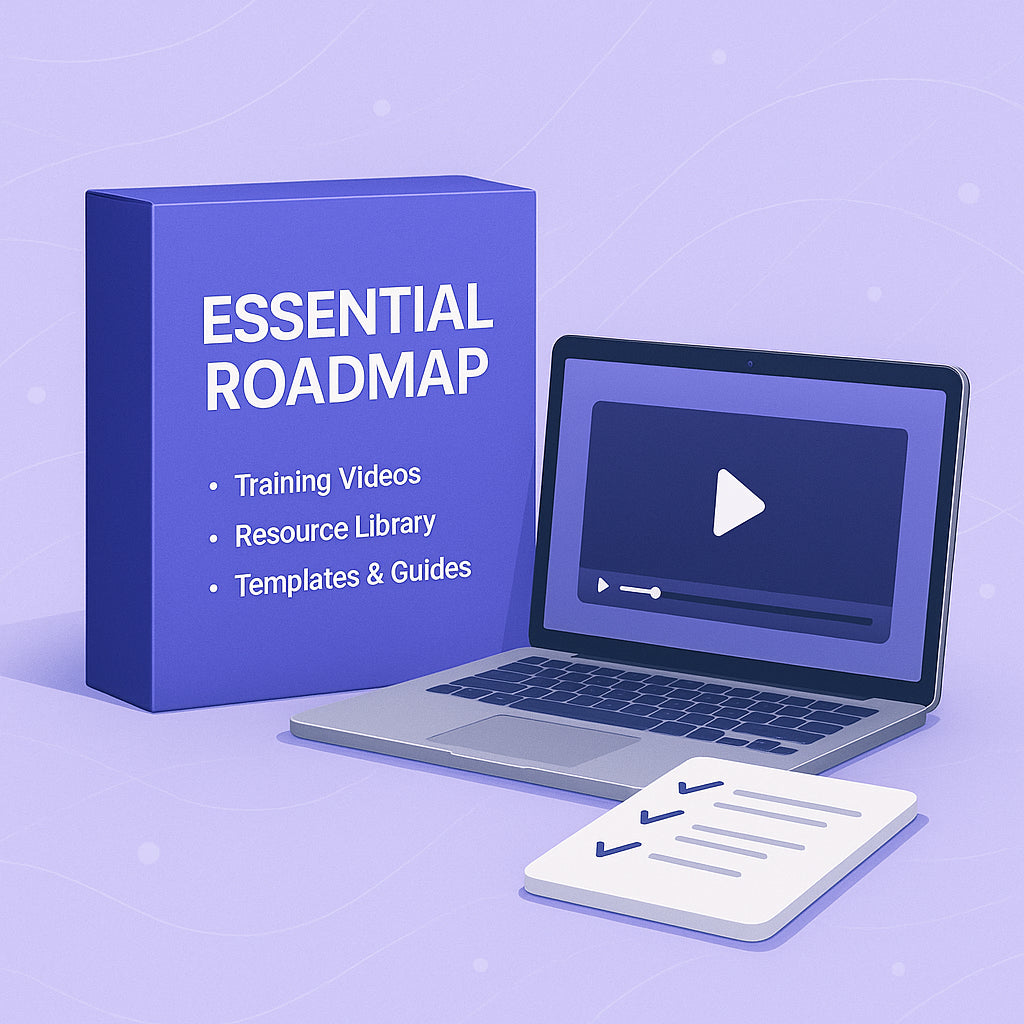
Spectrum Roadmap's Essential Roadmap is self-guided training for HR and people teams: training videos, a resource library, and templates and guides you work through at your own pace. When you want help applying it to your own roles and people, Premium Roadmap adds coaching with Debra in your Slack channel. You buy the size of program you can use, then add to it.
What it costs to waitA program that waits on next year's budget leaves this year's interviews exactly as they are.
Complaint 02
The training raised awareness, and the interviews stayed the same.
Awareness sessions explain what neurodivergence is. Many stop there, so capable candidates keep getting screened out on eye contact and small talk instead of job ability. Your team leaves the workshop agreeing with every slide, then goes back to the same interview questions on Monday.
Neurodivergent staff notice too. A generic awareness course can read as a checkbox, and the people it was meant for are often the first to say so.
What to do instead
Change the interview itself.
Score candidates on a structured rubric tied to the work. Ask the same question a different way. Write instructions down. Share the format ahead of time. Spectrum Roadmap trains your HR team on each of these changes and shows you how to answer hiring managers who worry it lowers standards: a review that measures the work rather than the small talk. The inclusive interviewing guide is a good place to start.
What it costs to skip thisThe talent is there. It's being screened out, one unchanged interview at a time.
Why a smaller program works
Most of what works is small changes, made by your own team.
Spectrum Roadmap is built on one observation from Debra Solomon's 30+ years in autism advocacy and corporate leadership. Inclusive hiring rarely needs an overhaul. It needs a question asked differently, an agenda sent before the meeting, and managers who know what an accommodation looks like on an ordinary Tuesday.
"The fix is rarely a big program. It's usually a handful of small changes, made by people who understand why they matter."Debra K. Solomon, founder of Spectrum Roadmap
Complaint 03
Managers got one workshop, then a new hire and no one to call.
The hard moments come after the offer: the first one-on-one, the first piece of feedback, the first accommodation request. A workshop from three months ago rarely answers the question a manager has on a Tuesday afternoon. That gap is how teams finally hire neurodivergent people and then lose them within a year.
What to do instead
Give managers somewhere to take the question.
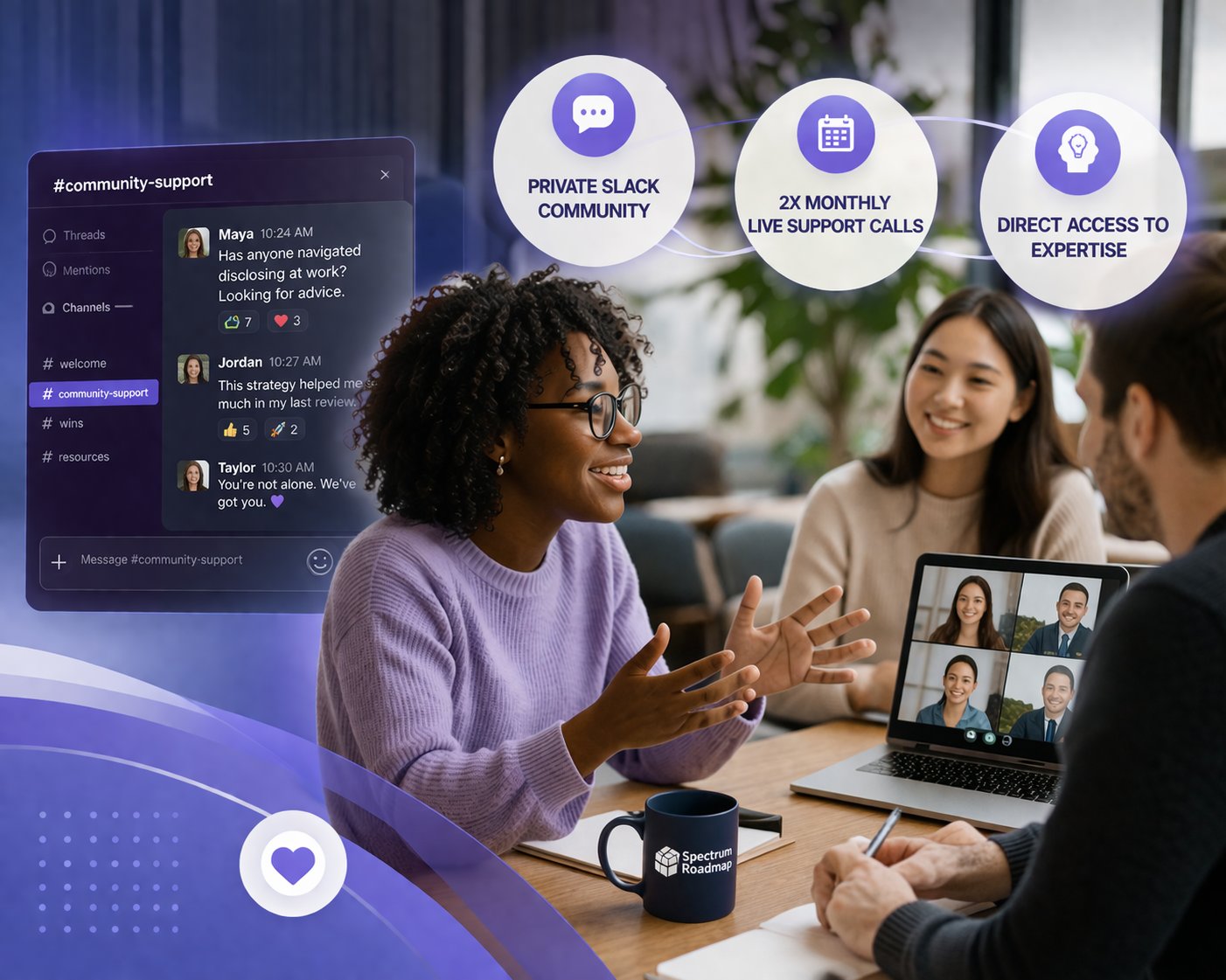
Spectrum Roadmap's Community is a private Slack space for HR teams, with live calls with Debra every other Thursday. Premium Roadmap puts Debra in your own Slack channel, so a specific situation gets a specific answer. Often the answer is small: an accommodation is often just a written agenda before the meeting.
What it costs to skip thisAn early departure costs you the hire, the search to replace them, and your team's confidence that this can work.
Complaint 04
When the engagement ended, the know-how left with the consultant.
A services engagement and a coached program can teach the same things. The difference is who holds the knowledge when the work is done.
What happens now
In a services engagement, the consultant holds the expertise and does much of the work. That's efficient while the contract runs. When it ends, the interview changes, the accommodation decisions, and the manager support all depend on whoever on your team paid closest attention.
What it costs to skip thisA program that lives in one person's head ends the day they move on.
What to do instead
Build the system inside your team, and write it down.
Spectrum Roadmap teaches your HR team the method, then helps you put it into your own process: your rubrics, your onboarding checklist, your approach to accommodations and disclosure. Because it's documented in your words, a new manager can pick it up without a new contract. Your team ends up with a shared language for neurodiversity, and it stays when people change roles.
Course or coaching
With no in-house expertise, a course alone leaves a gap. Add coaching.
A self-paced course teaches the what: how interviews screen people out, what accommodations look like, how to give clear feedback. It can't see your job descriptions, your interview loop, or the manager who's struggling this week. With nobody on your team who has done this before, a video-only course leaves you guessing at the step between knowing and doing.
Our recommendation is simple. If someone on your team already has neurodiversity hiring experience, Essential Roadmap on its own is likely enough. If you're starting from zero, pair it with Premium Roadmap so Debra reviews what you change before candidates feel it.
Explore Essential RoadmapAn honest fit check
Sometimes a consultancy or specialist provider is the better choice.
Spectrum Roadmap trains and coaches your HR team. It doesn't place candidates, produce ROI reporting for leadership, run on an enterprise LMS, or award a certification. When one of those is what you need, choose a provider built for it.
You need candidates, not just a better process.
Choose a placement-led provider. auticon, an autistic-majority IT consultancy, places neurodivergent consultants alongside its training and job coaching. SourceAbled leads with a sourcing and hiring platform.
You're rolling out to thousands of employees.
If IT and L&D need an LMS, single sign-on, seat management, and usage reporting, an enterprise platform such as Uptimize is built for that scale.
You need a recognized credential.
IBCCES offers self-paced, credit-hour training that ends in a formal certification, which suits teams who must show an accredited credential.
You want an outside team to run the program.
If you'd rather hand the work to a services partner than build it in-house, a consultancy such as Neurodiversity in the Workplace, a nonprofit offering inclusive hiring programs, consulting, coaching, and training, is the better fit.
Side by side
Four ways to run a neurodiversity hiring program.
This comparison lines up building it yourself, a consultancy engagement, a self-paced course on its own, and a coached self-serve program like Spectrum Roadmap. It shows who does the work, who each option suits, and what's left when the engagement or course is over.
| What matters | Build it yourself | Consultancy engagement | Self-paced course only | Coached self-serve (Spectrum Roadmap) |
|---|---|---|---|---|
| Who does the work | Your team, from scratch | Mostly the consultant | Your team, on its own | Your team, with a coach |
| Best fit | Teams with in-house neurodiversity expertise and time to own it | Larger organizations that want an outside team to lead | Teams with some experience who need structure | HR teams of one to a few with no in-house expertise |
| Changes your interviews | If you know what to change | Yes, while the engagement runs | Only if your team applies it | Yes, with your coach reviewing the changes |
| Help after a hire starts | Whatever you set up | Depends on the contract | None built in | Slack and live calls every other Thursday |
| What stays when it ends | Whatever you documented | Depends on the handoff | The course materials | Your own documented process |
| Candidate pipeline | No | Some providers also broker talent | No | No |
Moving off a consultancy
A 90-day plan for switching to a coached program.
Moving from a consultancy to a coached self-serve program works best in four stages, each with one clear output. The same plan works for a team starting from zero. Spectrum Roadmap's training covers each stage, and Premium Roadmap coaching lets Debra review the output before you move on.
- Days 1 to 15
Keep what worked.
Collect the rubrics, notes, and templates from any past engagement. Name one person on your team who owns the program.
- Days 16 to 45
Train the people who hire.
Everyone who interviews or manages works through Essential Roadmap, so the team shares one language.
- Days 46 to 75
Rewrite one interview loop.
Pick one open role. Build a structured rubric, send the format ahead, and review the questions with your coach.
- Days 76 to 90
Plan for after the offer.
Write the onboarding checklist and accommodation process. Disclosure stays the candidate's decision. Tell managers where to bring questions.
FAQ
Questions HR teams ask about consultancies and coaching.
Short answers to what smaller HR teams ask Spectrum Roadmap when they're deciding between a consultancy, a course, and coaching.
Is a self-serve neurodiversity course enough if we have no internal expertise?
A course gives your team the knowledge, but with no one in-house who has done this before, you also need someone to check how you apply it. Spectrum Roadmap pairs the self-guided Essential Roadmap with Premium Roadmap coaching from Debra Solomon for that reason.
How do companies decide between building a neurodiversity program themselves and bringing in outside help?
Build it yourself if someone on your team already has neurodiversity hiring experience and the time to own it. If not, bring in outside help: a consultancy when you want them to run the program, or a coached program like Spectrum Roadmap when you want your own team to run it.
What should a small company look for in a neurodiversity training provider?
Look for training that changes your actual interview and onboarding process, help that continues after a hire starts, and a scope that fits a small HR team. Ask who teaches it and what hiring experience they bring.
Does Spectrum Roadmap place neurodivergent candidates?
No. Spectrum Roadmap trains and coaches your HR team to find, interview, and support neurodivergent candidates. If you need candidates placed with you, a placement-led provider is the better fit.
How do I make the case for outside coaching when we've always run our own training?
Show leadership what your own training hasn't changed yet, such as the interview loop or how new hires are supported in their first months. Then present coaching as a specific set of changes to those processes, reviewed by someone who has made them before.
Ready to see what a few small changes can do?
Premium Roadmap pairs the full training with coaching from Debra in your Slack channel, so your team makes the changes and keeps them.