Decision framework · For HR and people teams
Build vs. buy a neurodiversity program: a decision framework.
Build in-house if someone on your team has run neurodiversity hiring before and has time to own it. Bring in a consultancy if you want an outside team to do the work. If you have no internal expertise but want your HR team to own the program, a coached self-serve program like Spectrum Roadmap fits best.

- 01 · BuildBuild it in-houseYour team designs the training, interview changes, and accommodation process from scratch.
- 02 · Buy servicesHire a consultancyAn outside firm assesses your process and runs the program with you for the length of an engagement.
- 03 · The middle pathUse a coached self-serve programYour HR team runs a ready-made roadmap, with an expert coach answering questions about your own hires.
01
Every path has the same job to do.
Whether you build, hire a consultancy, or use Spectrum Roadmap, a working neurodiversity program changes the same few things. The difference between the paths is who does that work, who owns it afterward, and how much expertise you need on day one.
- Interviews that measure what a candidate can actually do, so you stop screening people out on eye contact and small talk.
- Managers who know how to work with and communicate with neurodivergent team members once they start.
- Accommodations your team can put in place without guessing or over-promising, where disclosure stays the employee's decision.
- Onboarding and ongoing support, so the people you hire are still with you a year later.
02
Four questions decide whether to build or buy.
Answer these in order and stop at the first one that settles it. The first three send you to a path other than Spectrum Roadmap when it's the better fit, because a program your team can't run, or one that doesn't do what you need, is the most expensive option of all.
-
Has someone on your team already built neurodiversity hiring somewhere?
Hands-on experience means they've rewritten interview questions, set up accommodations, and supported neurodivergent hires through their first year, and they have the hours to do it again.
YesBuild it in-house. Use outside material as a reference library, not a program.NoGo to question 2. -
Do you need candidates delivered to you, not a better process?
Some teams need people in seats now and have no time to change how they source. That calls for a partner who places talent.
YesTalk to a placement partner, such as auticon for IT roles, NeuroTalent Works, or SourceAbled.NoGo to question 3. -
Do you need thousands of seats on an LMS, or an accredited certificate?
Large rollouts often require single sign-on, seat management, and reporting that IT and L&D sign off on. Some teams need a credential to point to.
YesLook at an enterprise platform such as Uptimize, or a certification body such as IBCCES.NoGo to question 4. -
Should an outside team run the program, or should your HR team own it?
This is the real build-vs-buy question for most small and mid-size teams. It decides what you're left with when the outside help steps away.
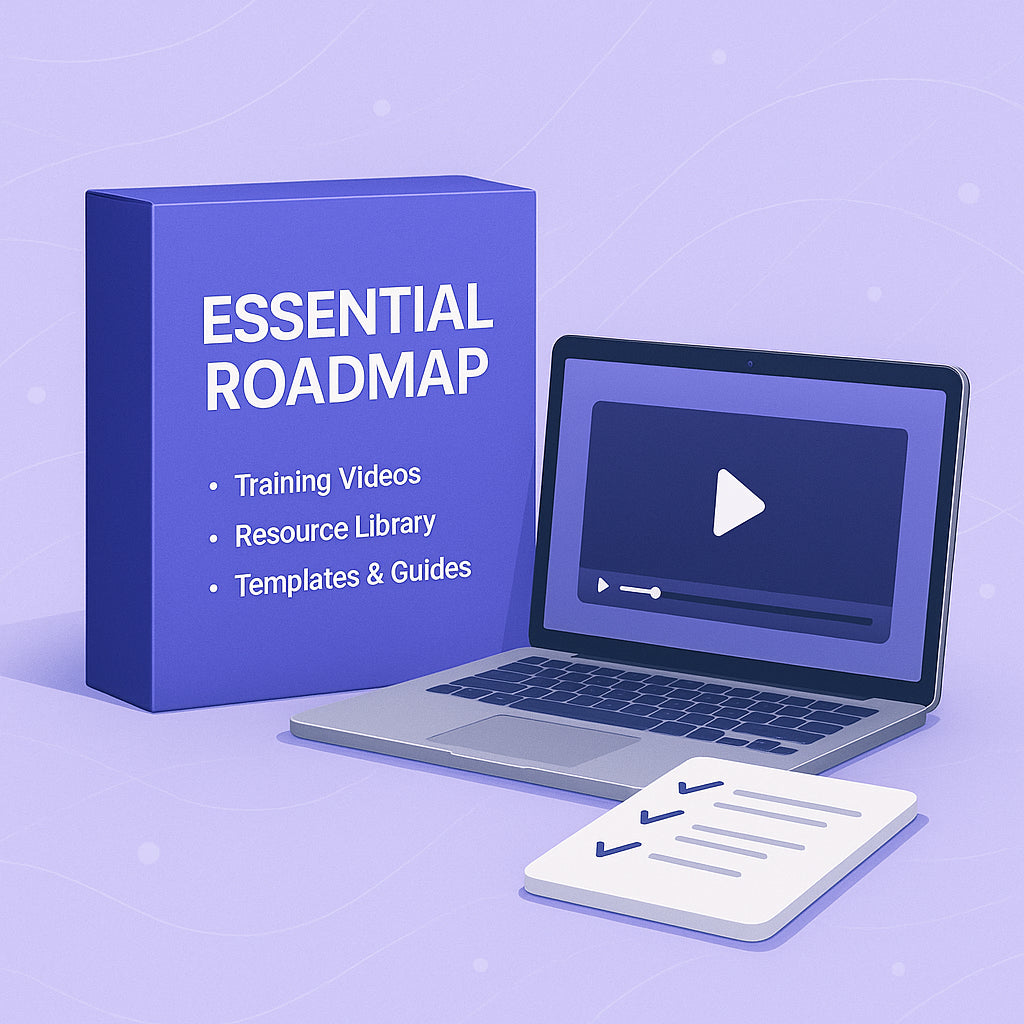
OutsideHire a consultancy, such as Neurodiversity in the Workplace in the US or Exceptional Individuals in the UK.Own itUse a coached self-serve program. With no internal expertise, start with Spectrum Roadmap's Premium Roadmap, built with Debra in your Slack channel. If you want to start on your own, the Essential Roadmap is self-guided.
03
How Spectrum Roadmap compares with building it yourself, a consultancy, and a course.
The comparison covers the four ways teams usually set up a neurodiversity hiring program: Spectrum Roadmap's coached self-serve program, building in-house, hiring a consultancy, and buying a video-only course. It weighs who owns the work, what expertise you need to start, and what each one covers. Consultancies differ from firm to firm, so treat that column as the typical shape of an engagement and confirm the details with any firm you talk to.
| What matters | Spectrum Roadmap (coached self-serve) | Build in-house | Consultancy | Video-only course |
|---|---|---|---|---|
| Who owns the program afterward | Your HR team | Your team | Shared during the engagement, then your team | Your team |
| Internal expertise needed to start | None | A lot | None | Enough to apply it |
| An expert answers questions about your own hires | Debra, in your Slack channel (Premium Roadmap) | Only if you hire one | ||
| Self-paced manager training | Training videos, templates, and guides | You write it | Varies by firm | |
| Interview redesign around what a candidate can do | Depends on your expertise | Teaches the idea; you apply it | ||
| Peer support between trainings | The Community, a private Slack group | Varies by firm | ||
| An outside team does the work for you | The stronger choice here | |||
| Places neurodivergent candidates with you | Teaches you where to look | Some firms, such as auticon and NeuroTalent Works | ||
| Accredited certificate | Varies by firm | Some, such as IBCCES |
Spectrum Roadmap's details come from its own products: the Essential Roadmap (self-guided), the Premium Roadmap (coaching with Debra), and the Community.
04
Who owns the program when the outside help steps away?
With a coached self-serve program like Spectrum Roadmap, your HR team owns the program from the first week, so nothing walks out the door when coaching ends.
A consultancy engagement is built around the firm's time. That's the right trade when you have no one to spare, and Neurodiversity in the Workplace and firms like it bring real institutional standing to the work. The question to ask before you sign is what your team will be able to run on its own once the engagement is over.
Building in-house gives you full ownership too, but only if the person who builds it stays. Spectrum Roadmap sits between the two: a repeatable playbook your team runs, with Debra on hand while you learn it.
Is a self-serve course enough when you have no internal expertise?
A course on its own is rarely enough when nobody in-house has done this before, because someone still has to turn the lessons into changes to your own interviews.
Video training teaches managers what neurodivergence looks like at work. It can't look at your interview loop and tell you which question is screening out a strong candidate, or what an accommodation looks like on an ordinary Tuesday for the person you just hired. Generic awareness courses also tend to land as a checkbox, especially with neurodivergent staff.
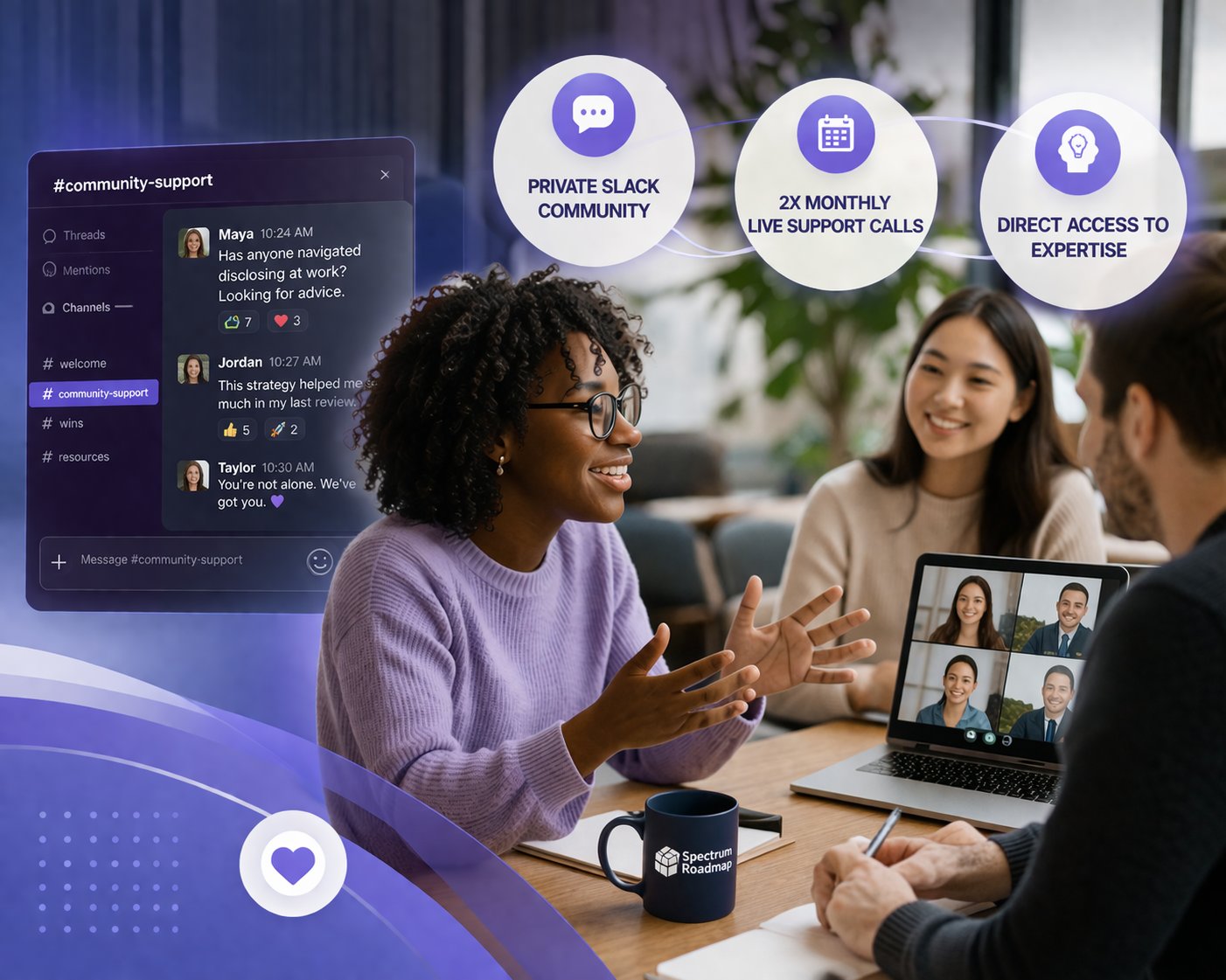
That's why Spectrum Roadmap offers two levels. The Essential Roadmap is self-guided, for HR teams that can take it from there. The Premium Roadmap adds coaching with Debra in your Slack channel, for teams that want an expert to tell them exactly what to change.
How do you make the case for outside coaching when you've always built your own training?
Make the case on what building it yourself has cost so far, then on the specific changes coaching will make.
Start with what leadership already sees: open roles, capable candidates who didn't get past the first round, and neurodivergent hires who left within a year. Each of those is a cost the current approach has already paid. Then name the changes: rewritten interview questions, written instructions for new hires, and a plan for how managers respond to a disclosure.
Spectrum Roadmap doesn't produce ROI reports for you, so agree up front on what you'll track, such as how many candidates reach a final round and how many hires are still with you after a year. Our guide to neurodiversity training ROI covers how to frame it.
05
Who coaches your team in a coached self-serve program?
At Spectrum Roadmap, the coach is Debra K. Solomon, the founder, with 30+ years of experience in autism advocacy and corporate leadership.
Debra has supported neurodivergent people, coached families, and guided companies for 30 years, and built Spectrum Roadmap after seeing both sides of the hiring struggle. With the Premium Roadmap, she works with your team in your own Slack channel, so your questions get answered about your own candidates and managers.
Your managers want to get this right. Nobody showed them how, so we will.
Read the whole story06
When to choose each path.
Each path suits a different team. Pick the one that matches who will do the work and what you need at the end of it, and use Spectrum Roadmap only when that's your HR team owning the program.
When to choose Spectrum Roadmap
Choose Spectrum Roadmap when your HR team will own the program, nobody in-house has neurodiversity expertise yet, and you need something a team of two can start this month. It fits HR business partners, heads of DEI with commitments but no playbook, and engineering directors who want plain changes to interviews and onboarding.
Start with the Premium Roadmap for coaching with Debra, or the Essential Roadmap if you'd rather work through it yourselves.
When to build in-house
Build it yourself when someone on staff has already run neurodiversity hiring, and has the time to write training, redesign interviews, and support new hires.
Best for: larger HR teams with a specialist on staff.
When to choose a consultancy
Choose a firm such as Neurodiversity in the Workplace when you want an outside team to assess and run the work, and value an established organization behind it.
Best for: teams with budget for an engagement and little time to own the program.
When to choose a placement partner like auticon
Choose auticon when you need neurodivergent IT and engineering talent placed with your team, with job coaching alongside. Spectrum Roadmap doesn't place candidates.
Best for: engineering teams that need people in seats now.
Questions people ask.
These are the questions HR and people teams ask most when they weigh building a neurodiversity program against buying training and coaching from Spectrum Roadmap or another provider.
How do companies decide whether to build a neurodiversity program in-house or buy outside training and coaching?
They decide on two things: whether anyone in-house has done this work before, and who should own the program afterward. Build in-house if you have that expertise and the time. Hire a consultancy if you want an outside team to run it, and choose a coached self-serve program like Spectrum Roadmap if your HR team will own it but needs an expert to guide them.
We have no internal neurodiversity expertise. Is a self-serve course enough, or do we need coaching?
A course is enough when someone on your team can turn the lessons into changes to your own interviews, onboarding, and accommodations. With no internal expertise, most teams need someone to look at their actual process and say what to change. Spectrum Roadmap's Premium Roadmap is built with Debra, in your Slack channel, for that reason.
What should a small company without HR specialists look for in a neurodiversity training provider?
Look for training your managers can finish on their own schedule, help redesigning your interviews around what a candidate can actually do, a named expert you can ask about your own situations, and a way to keep going after the training ends. Ask every provider who owns the materials once the engagement is over.
When is a consultancy like Neurodiversity in the Workplace a better choice than a coached program?
A consultancy fits when you want an outside team to run the work, when you want an established organization standing behind the program, or when your HR team has no time to own it. A coached self-serve program fits when your team will own the program and wants a playbook it can repeat without an ongoing engagement.
Does Spectrum Roadmap place neurodivergent candidates or offer certification?
No. Spectrum Roadmap trains and coaches your HR team to find, interview, and support neurodivergent employees, but it does not place candidates, award an accredited certificate, or run an enterprise learning platform. If you need those, look at a placement partner such as auticon, a certification body such as IBCCES, or an enterprise platform such as Uptimize.
How do I make the case for outside coaching when we've always built our own training?
Make the case on what building it yourself has cost so far: candidates screened out in interviews, hires who left within a year, and managers who were never shown how to help. Then show leadership the specific changes coaching will make to your interview loop and onboarding, and what you'll track to see whether they worked.
Which roadmap fits your team?
If your HR team will own the program, pick the level of help you want: coaching with Debra in your Slack channel, or the self-guided Essential Roadmap.