ROI calculator · For HR and people teams
Neurodiversity hiring ROI calculator: your payback period.
For the HR lead who has to take a neurodiversity hiring program to a CFO or a board. Put in your own hires, salaries, and turnover, and see when the program pays for itself.
A neurodiversity hiring program pays back when the early turnover it prevents costs more than the program fee plus your managers' training time. Spectrum Roadmap's calculator works it out from your own hires, salaries, replacement cost, and first-year attrition. Payback in months is year-one cost divided by the monthly turnover cost you avoid.
01 · The calculator
Your payback period, from your numbers.
The return on a neurodiversity hiring program shows up first in who stays. When managers know how to support a neurodivergent hire, fewer of those hires leave in their first year, and every exit you avoid is a replacement you don't pay for.
The calculator counts only that saving. It leaves out faster hiring and the strong candidates you stop screening out, so the figure you take to leadership is the conservative one.
Your results, updated as you type.
- 8.7 monthsPayback period: year-one cost divided by turnover cost avoided per month
- $16,000Turnover cost avoided each year
- $4,400Net return in year one
- 161%Three-year ROI on total cost
- $29,600Net return over three years
Assumes the same number of hires each year, and counts each year's hires only for their first year. Change any input and the cost table on this page changes with it.
02 · The method
Four lines of math your CFO can check.
Spectrum Roadmap's calculator uses no hidden multipliers and no industry averages. Every figure comes from a number your own HR and finance teams already hold, so the person approving the budget is checking their assumptions, not ours.
The replacement cost is the input that moves the answer most. Use the figure your finance team already uses for turnover elsewhere in the business.
- Cost of one early exit
What you spend to recruit, onboard, and ramp up a replacement.
salary × replacement % - Exits you avoid each year
The drop in first-year attrition, applied to the people you hire.
hires × (attrition today − attrition with program) - Turnover cost avoided
The yearly saving, the only return the calculator counts.
exits avoided × cost of one exit - Payback period
How many months of savings it takes to cover year one.
(fee + manager hours × rate) ÷ (saving ÷ 12)
03 · Three-year view
What a neurodiversity hiring program costs and returns over three years.
The table sets the cost of running Spectrum Roadmap beside the cost of doing nothing, which is paying to replace the neurodivergent hires who leave in their first year. Year one carries the training hours, so it costs the most; later years carry only the renewal fee and short refreshers. Every cell follows the inputs in the calculator.
| Cost line | Year 1 | Year 2 | Year 3 | 3-year total |
|---|---|---|---|---|
| Program fee | $6,000 | $2,000 | $2,000 | $10,000 |
| Manager training time | $5,600 | $1,400 | $1,400 | $8,400 |
| Total cost with Spectrum Roadmap | $11,600 | $3,400 | $3,400 | $18,400 |
| First-year attrition cost, no program | $48,000 | $48,000 | $48,000 | $144,000 |
| First-year attrition cost, with Spectrum Roadmap | $32,000 | $32,000 | $32,000 | $96,000 |
| Net return | $4,400 | $12,600 | $12,600 | $29,600 |
04 · How the cost works
What does Spectrum Roadmap cost?
Spectrum Roadmap is sold as a program your HR team buys and runs, with no enterprise contract or consulting engagement to scope first. There are three ways to join, and the right one depends on whether your team wants to make the changes itself or have Debra beside you while you do.
Self-guided · For HR and people teams
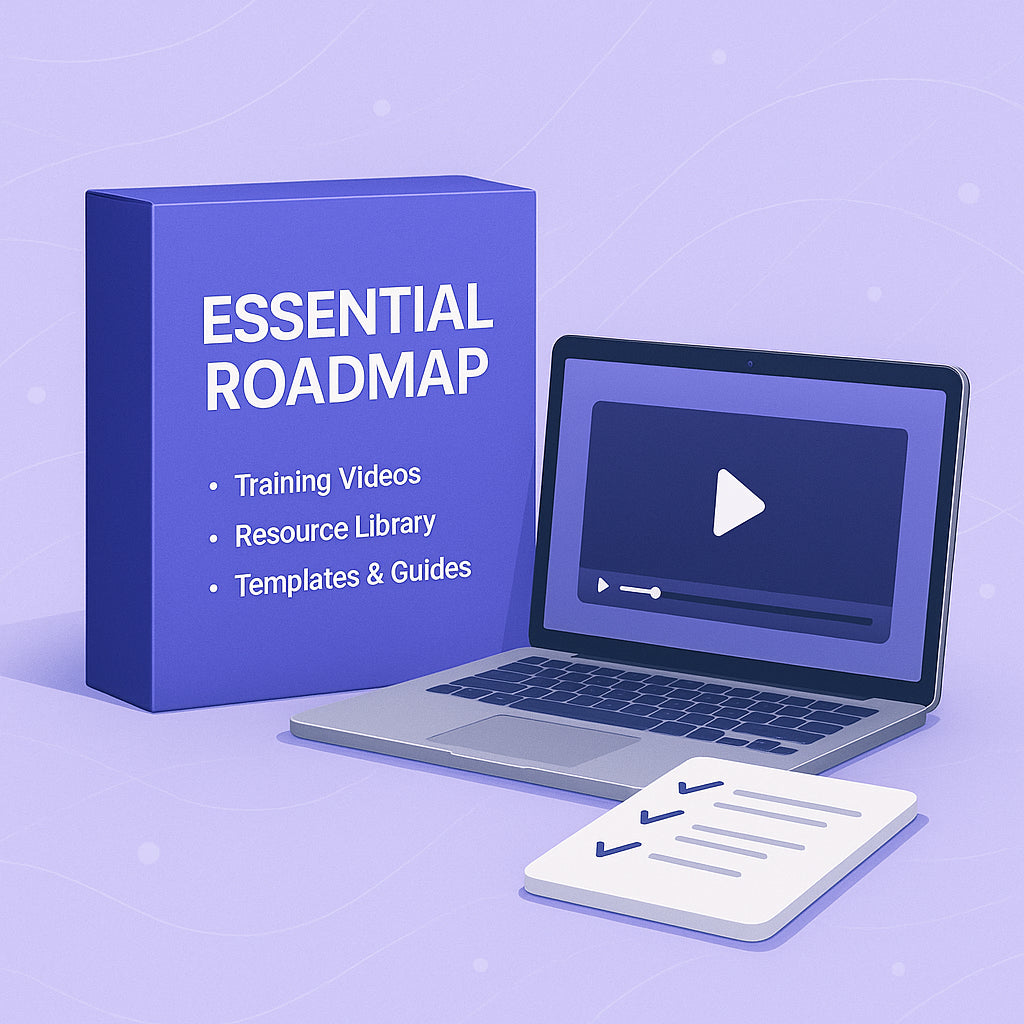
Essential Roadmap
Training videos, a resource library, and templates and guides your team works through at its own pace: inclusive interviews, manager support, and accommodations. Price: [Essential Roadmap price].
See the Essential Roadmap
1:1 coaching · Built with Debra
Premium Roadmap
One-on-one coaching with Debra in your own Slack channel. She looks at your hiring and onboarding and tells you exactly what to change. Price: [Premium Roadmap price].
See the Premium Roadmap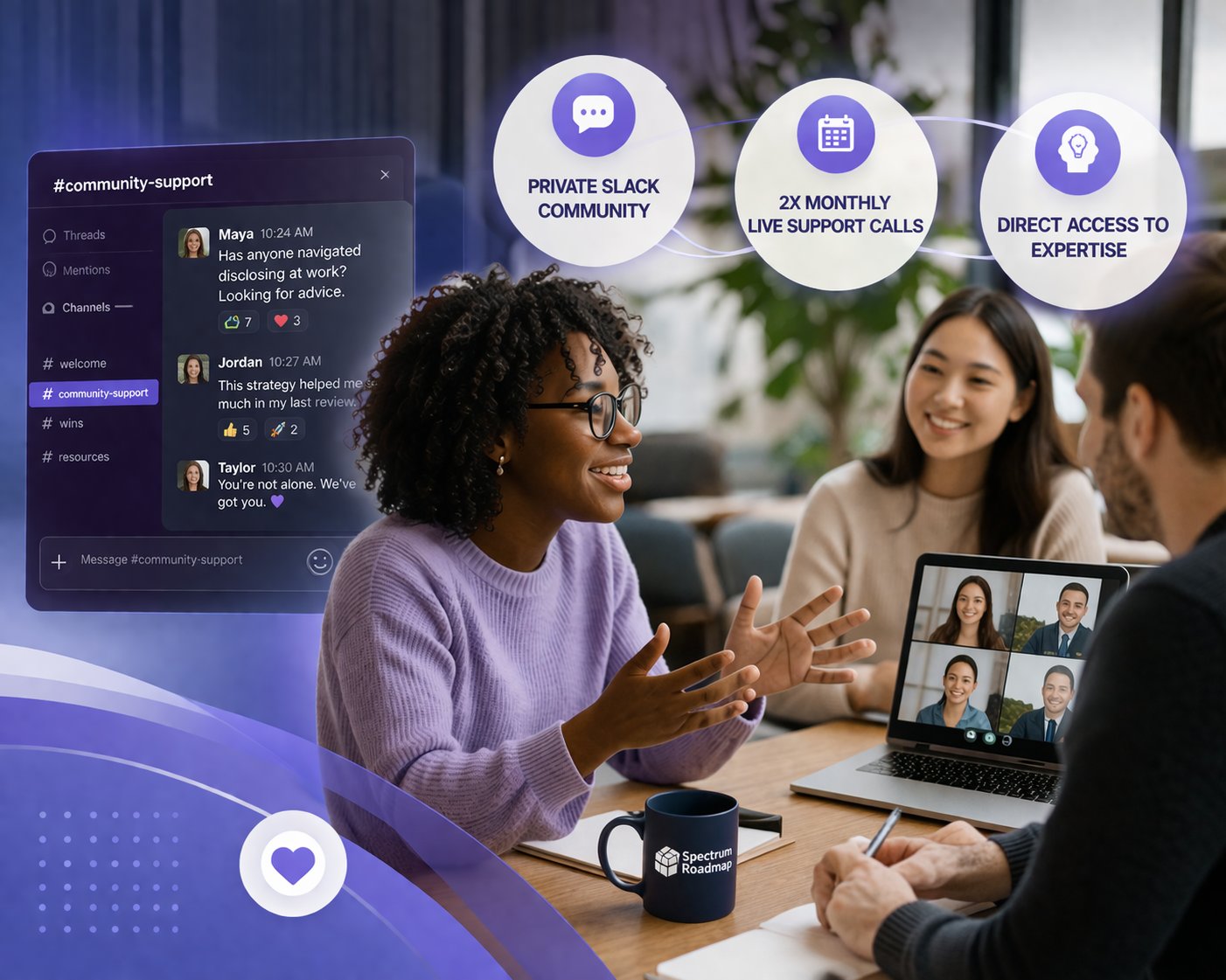
Peer support · In Slack
The Community
A private Slack community and live calls with Debra every other Thursday, for the questions that come up between trainings.
See live call accessWhat costs extra is your team's time.
The program fee is the smaller part of year one in most plans. The larger part is the hours managers and interviewers spend learning a new way to run an interview and support a new hire, which is why the calculator prices those hours at your loaded rate.
What Spectrum Roadmap doesn't include.
Spectrum Roadmap doesn't source candidates, run an LMS with SSO and seat reporting, or issue a certificate. If your business case depends on any of those, budget for them separately or look at the providers named under "Some teams get a better return elsewhere" on this page.
05 · What drives the return
Small changes make the return.
Very little of this calls for an overhaul. The return on a Spectrum Roadmap program comes from four ordinary changes, and the first one is the only one the calculator counts.
Managers who know what to do on day one.
Most early exits start with a manager who wanted to get it right and was never shown how. Written instructions, a clear agenda before meetings, and feedback given plainly keep good hires past their first year.
Interviews that measure the work.
A structured rubric and a few rewritten questions let you see what a candidate can actually do, so strong people stop being screened out on eye contact and small talk. Fewer rejected good candidates means fewer roles reopened.
Accommodations handled the first time.
An accommodation is often just a written agenda or a quieter desk. A playbook your team follows means fewer drawn-out requests, and disclosure stays the employee's decision.
A system HR can repeat without help.
A public neurodiversity commitment without a playbook costs the same effort every time a new manager hires. A repeatable process means the training hours in year one aren't spent again in year two.
06 · Proving it worked
Track four metrics to show the board the program worked.
The payback estimate is a forecast; leadership will want the actual figures a year later. Pull a baseline for each metric from your HRIS and applicant tracking system before the program starts. Spectrum Roadmap doesn't produce these reports for you, so set them up with your people analytics team on day one.
- First-year retentionShare of neurodivergent hires still with you 12 months after their start date. This is the number the calculator's savings rest on.
- Interview-to-offer rateOffers made as a share of candidates interviewed, before and after you change your interview questions and rubric.
- Time to fillDays from opening a role to an accepted offer, for the roles where you changed the interview.
- Manager training completionShare of hiring managers who finished the training, the input every other metric depends on.
07 · An honest comparison
Some teams get a better return elsewhere.
Spectrum Roadmap fits an HR team, often a team of one or two, that needs a practical system it can start this quarter. Larger or differently shaped needs are better served by other providers, and choosing the right fit is part of a sound business case.
| Provider | Choose it when | What to weigh |
|---|---|---|
| Spectrum Roadmap | You're a small HR team that wants self-guided training, one-on-one coaching with Debra, or both. | No candidate sourcing, LMS integration, or certification. |
| Uptimize | You need to train thousands of employees on one platform, with the LMS, SSO, and seat reporting IT and L&D require. | Priced and scoped for enterprise rollouts. |
| auticon | You need neurodivergent IT consultants placed with you, alongside training and job coaching. | Oriented to large enterprises and IT roles. |
| IBCCES | Your team needs a formal certification or credit hours at the end of a self-paced course. | Built around accreditation more than redesigning your hiring process. |
08 · Who built it
Built by someone who has sat on both sides of the table.
Debra K. Solomon founded Spectrum Roadmap after more than 30 years in autism advocacy and corporate leadership. She has coached neurodivergent people and the companies that hire them, and saw that both sides wanted the same thing. Neither had been shown how.
That's why the calculator counts only what an HR team can measure. The fix is rarely a big program. It's usually a handful of small changes, made by people who understand why they matter.
Practical, proven, and people-first.
09 · Questions
Questions people ask about neurodiversity hiring ROI.
Short answers for the HR leads, CFOs, and engineering directors weighing a program.
What is a typical payback period for a neurodiversity hiring program?
Spectrum Roadmap doesn't publish a typical figure, because payback depends almost entirely on how many neurodivergent people you hire and how many you lose in their first year today. Payback in months is your year-one program cost divided by the turnover cost you avoid each month, so put your own numbers into the calculator.
What numbers convince a CFO to fund a neurodiversity hiring program?
Three numbers: what first-year turnover of these hires costs you today, what the program and manager time cost in year one, and how many months until the first outweighs the second. Use your finance team's own replacement-cost figure, so the CFO is checking their assumption instead of yours.
What metrics should a neurodiversity hiring program report to the board?
First-year retention of neurodivergent hires, interview-to-offer rate, time to fill open roles, and manager training completion. Spectrum Roadmap doesn't run these reports for you, so pull a baseline from your HRIS and applicant tracking system before you start.
How do I justify the time cost of manager neurodiversity training to my engineering org?
Price the hours: number of managers, times hours each, times loaded hourly cost. Put that figure next to the cost of replacing one engineer who leaves in their first year; if one avoided exit covers the hours, the training has paid for itself.
Do self-paced neurodiversity courses or hands-on coaching give a better return?
Self-paced training costs less and fits a team that can make the changes itself; one-on-one coaching costs more and fits a team that wants a specialist to say exactly what to change. Spectrum Roadmap offers both: the Essential Roadmap is self-guided, and the Premium Roadmap is built with Debra in your Slack channel.
Ready to see what a few small changes can do?
Pick the roadmap that fits your team, then put its price into the calculator and take the payback figure to finance.